For CoK 2023 I ran a combat simulation of all the non-individual units (here) to see how they’d compare head-to-head in hypothetical match-ups. I updated that analysis for CoK 2024. To save you some time, I’ll walk through the methodology.
I ran 1.25 million combats in a Python simulator with selected special rules, randomized initiative, and terrain in about 30% of battles. The simulator compares unit combat; it does not reproduce a full Kings of War game.
- Initiative and Randomization: Faster units usually struck first. In some simulations, I randomized the order.
- Terrain Effects: About 30% of simulations included varied terrain.
The simulator varied initiative and terrain, but it still simplifies combat in Kings of War.
Methodology
- Simulations: 250,000 matchups, each with 5 battles, totaling 1.25 million combats.
- Special Rules Included: Blast, Brutal, Cloak of Death, Crushing Strength, Dread, Elite, Fury, Headstrong, Iron Resolve, Lifeleech, Pathfinder, Phalanx, Piercing, Radiance of Life, Regeneration, Shattering, Stealthy, Strider, Thunderous Charge, Vicious.
Elo Rating System
Elo ratings compare units based on their results in simulated combat.
- Initial Rating: Each unit began with a set baseline Elo rating. This standard starting point is common in Elo systems and ensures all units start from an equal footing.
- Rating Adjustments After Combat: After each combat, the Elo ratings were updated. The adjustment is made based on whether the unit won, lost, or drew, and how unexpected the outcome was, given the difference in ratings between the competing units. The process involves:
- Adding points to a unit’s rating if they win, especially against a higher-rated opponent.
- Losing points in the case of a defeat, particularly when losing to a lower-rated opponent.
- The amount of adjustment depends on the difference in ratings and the expected outcome of the match. A surprise victory or defeat leads to a more significant change in rating.
- Expectation Calculation: The system calculates the expected outcome of a match based on the current ratings of the two units. Units with higher ratings are expected to win more often against lower-rated opponents. If a high-rated unit wins against a lower-rated unit, the rating change is smaller, and vice versa.
- Effectiveness Determination: Once I had the Elo rating, I evaluated the ratio between cost and Elo to determine what units are over or undercosted.
These ratings summarize how each unit performed across its simulated matchups.
Analyzing Unit Size Variability
I first compared Elo ratings by unit size. The box plot below shows the spread in each category:
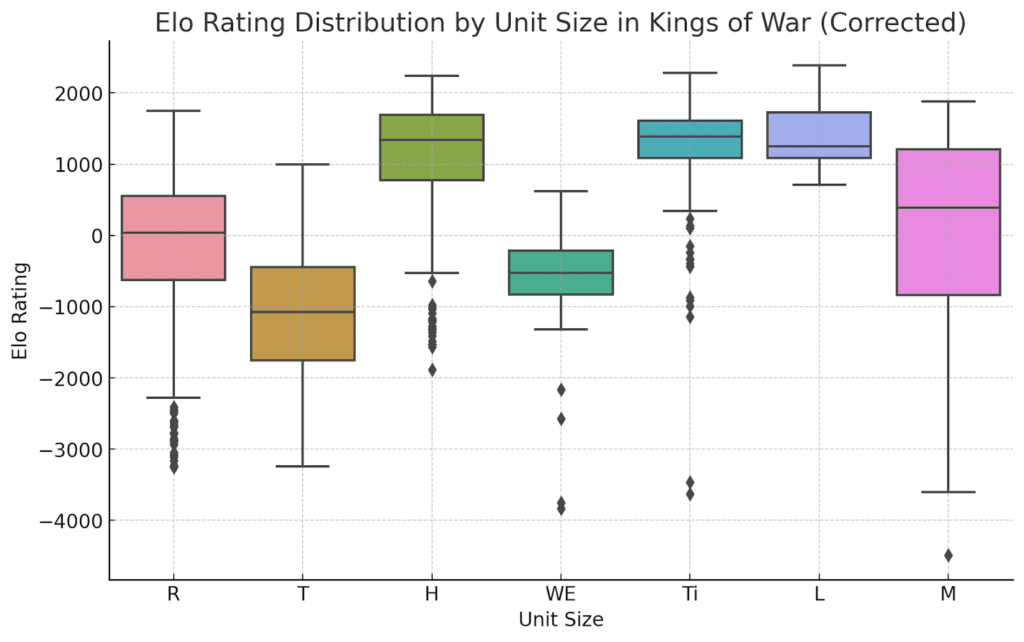
The standard deviation of Elo ratings varied by unit size:
- Monster: 1426
- Regiment: 994
- Titan: 890
- Troop: 871
- Horde: 794
- War Engine: 784
- Legion: 460
Monster ratings varied the most (standard deviation 1,426), followed by regiments (994). Legions varied the least (460). The box plot shows the spread across all unit sizes.
Why do monster ratings vary more? One possibility is that the simulator misses special rules that matter to some monsters. Base size may also matter: a 50mm monster’s value depends partly on movement and positioning, beyond its stat line. Skilled players may get more from monsters, while legions show a narrower range in this model. These are explanations to test, not conclusions the simulation can prove.
How Keywords Impact Performance
I used an ANOVA test to compare Elo ratings across units with different keywords. Crushing Strength had the strongest relationship with Elo (p=1.96×10−56); Strider and Brutal also correlated with higher ratings. These are associations in the simulator, not proof that a keyword alone causes a unit to perform better.
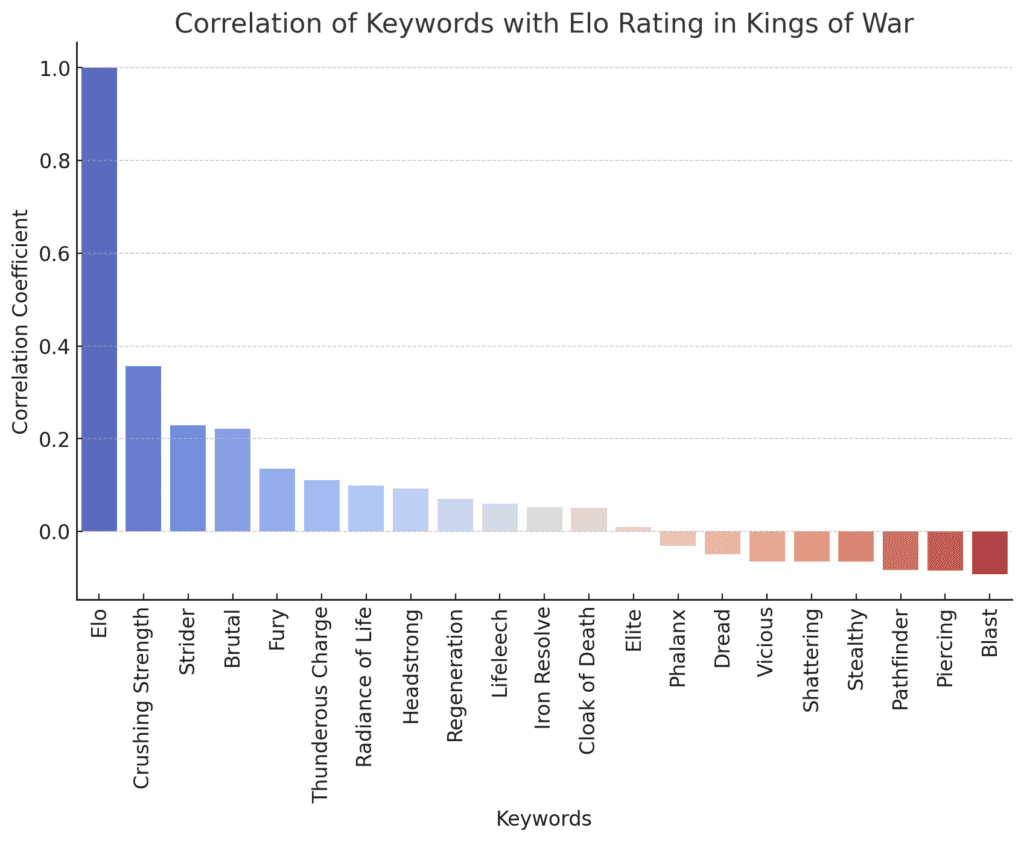
The correlation analysis also found positive associations for Crushing Strength and Strider, and negative ones for Blast, Piercing, and many shooting-related keywords. In these one-on-one simulations, ranged units cannot combine fire from several units as they can in a full game, which may help explain the lower ratings.
I’ll have additional analysis to follow, but please comment on anything specific you’d like to see from the new CoK 2024 simulations.