Sean Troy won the 2026 US Masters at 6–0 with Ratkin. Travis Timm followed at 5–0–1 with Goblins.
That top three gives us a useful answer to several questions I raised before the event. In the first US Masters preview, I looked at a field that was concentrated around fewer factions and a tighter set of list-building choices. In Part II, I focused on what those lists were trying to accomplish on the table. The main question was whether the harder-hitting Fourth Edition field could keep scoring after the first major trade. Goblins offered the cleanest stress test. They brought extreme unit counts, Unit Strength, nerve, and shooting, even though their expected damage was slightly below the field average. Ratkin offered a related problem: plenty of bodies and scoring power, backed by speed, shooting, and efficient trading pieces.
Both factions converted those profiles into wins.
Ratkin and Goblins accounted for nine of the 64 players. They took three of the top 4 positions in the report and seven of the top 14. Together, they finished 37–13–4, an adjusted win rate of 72.2% (adjusted in that draws count for half a win). The strongest lists at Masters did more than hit hard. They occupied space, created repeated scoring problems, and made opponents work through too many useful bodies before the game ended.
TL;DR
- Sean Troy went 6–0 with Ratkin to become the 2026 US Master.
- Ratkin finished 18–4–2, good for a 79% adjusted win rate.
- Goblins finished 19–9–2, good for a 67% adjusted win rate.
- Ratkin and Goblins combined for seven of the top 14 places despite representing only 14.1% of the field.
- Forces of Nature was the largest faction and performed well, but did not control the top of the event.
- Elven shooting produced a few strong finishes but struggled across the full faction.
- Orcs finished below average again. The current results do not support treating them as a dominant faction in need of a nerf.
The dataset
This recap uses the post-event results from 64 players across six rounds. The workbook contains 384 player-game rows, representing 192 unique games. You can download the full report here:
A few limitations apply. This is one event, faction samples are small, and Masters pairings are not random. Player strength, matchup paths, terrain, scenarios, and event scoring all affect the final results. The matchup tables are useful for identifying questions, but most individual cells are too small to prove that one faction has a reliable advantage over another.
As always, I also reserve the right to have made a spreadsheet mistake somewhere around the margins. Consider the analysis directionally useful rather than divinely revealed (though if you want to pretend it’s divinely revealed, I’ll go with that).
Sean Troy wins another event with Ratkin
Sean Troy finished 6–0 after beating Forces of the Abyss, Orcs, Goblins (twice), Undead, and Northern Alliance. He was the only undefeated player in the field. This continues a strong year for both Sean and Ratkin. Sean also won the 2026 Northwoods GT at 5–0. I had the pleasure of playing him there, by which I mean he demolished me without mercy while being an absolute gentleman about it: His Ratkin created scoring and positioning problems from the opening turns. Multiple Wretch Hordes occupied space, screened important pieces, threatened objectives, and gave him enough redundancy to absorb trades without losing control of the game. He played quickly, clearly, and fairly throughout our game. I am happy to see him win the US Masters title for our part of the Midwest. He is exactly the kind of player you are comfortable rooting for, even after he has removed most of your army.
Sean’s win also fits a larger faction pattern: Ratkin went 18–4–2 at Masters. All four Ratkin players finished with winning records and landed in the top 15. At Adepticon, Ratkin had already posted a 9–1 record and placed two players near the top of the event. (Data & Dice) Across Adepticon and Masters, Ratkin are now 27–5–2. Sean’s undefeated Northwoods run is another result pointing in the same direction, as we have seen with multiple Ratkin finishes in multiple tournaments all across the US.
That still does not make every Ratkin list automatic or every Ratkin player unbeatable. It does make Ratkin the clearest early Fourth Edition benchmark. Players preparing for competitive events need a practical answer for a faction that combines speed, unit count, scoring depth, shooting, and efficient trading pieces. We’ll see if the Fracture nerfs set the balance back.
The Goblin stress test worked
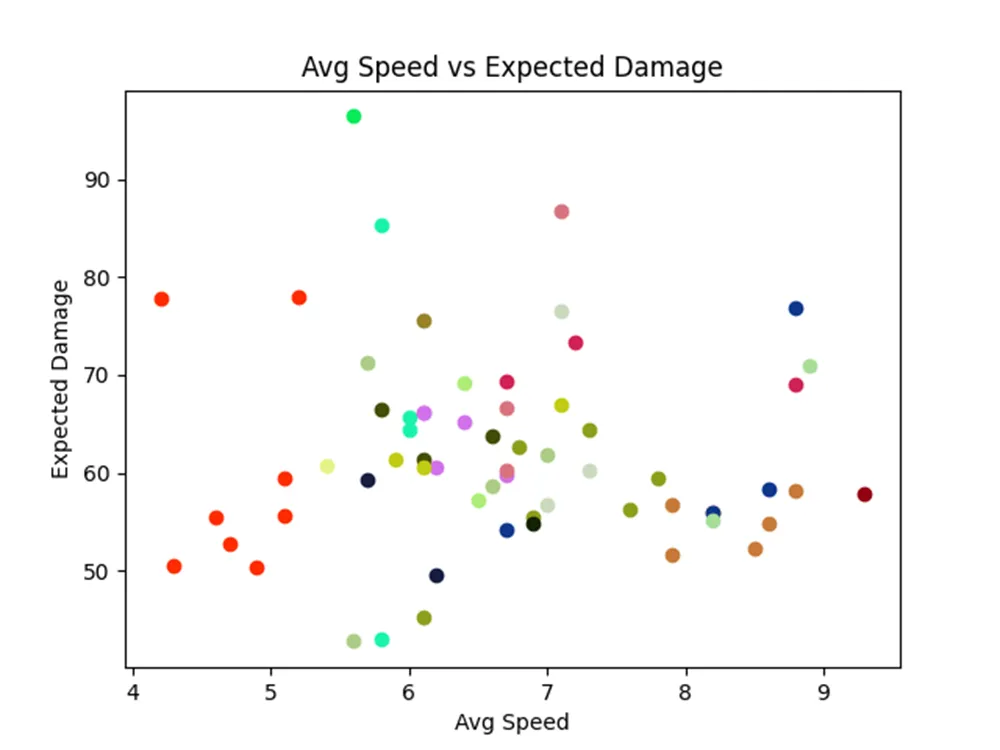
Before Masters, Goblins stood out because their list profiles were unusual even within a strong field. The five Goblin lists averaged 22.6 units, compared with 14.6 for the field. They averaged 36.4 Unit Strength against a field average of 27.5, and their average nerve pool was 290.6 compared with 225.7 across the event. Their expected damage was slightly below average, but their ranged attack count was nearly three times the field average. (Data & Dice)
That led to a fairly simple set of pre-event questions: Could opponents remove enough Goblin units before the game ended? Could they do that while taking concentrated shooting? Could they avoid wasting premium damage on cheap or awkward targets? Could they win scenarios while Goblin units spread into multiple parts of the board?
The Masters field did not find consistent answers.
Goblins finished 19–9–2. Travis Timm led at 5–0–1, finishing second. Dustin Howard was 4-1-1 and 4th. Chet Dudick went 4–2 and finished 11th. The faction’s matchup path is also worth watching. Goblins went 4–0 against Elves and 3–0 against Orcs. Forces of Nature held them to 3–2–2 across seven games, while Ratkin beat them twice in three games.
Those samples are too small for confident matchup claims. They do provide some early clues. Armies with their own depth, mobility, and scoring presence may be better equipped to handle the Goblin table footprint. Armies that rely on a smaller number of premium units can struggle to remove enough Goblin material while still protecting the scenario.
The Goblin result also supports a broader list-building point. Expected damage is useful, but it does not fully describe how much pressure a list creates. A cheap scoring unit can screen a hammer, contest a token, block a landing zone, force an overrun, or survive long enough to matter on turn six. Goblins brought more opportunities to perform those jobs than any other faction in the field.
Players preparing for them should think beyond how many units they can kill. The more useful question is whether their list can clear cheap scoring pieces efficiently while preserving enough movement and Unit Strength for the late game.
Forces of Nature was good, not dominant
Forces of Nature was the most represented faction at Masters, with eight players. That made it the clearest test of whether pre-event popularity would turn into control of the standings. Nature finished 22–20–6, an adjusted win rate of 52%. Sam Kula finished 4–0–2 in third place, and five Nature players landed in the top 26. That is a good faction result. It is also well short of domination.
The faction’s range of builds probably helped it avoid a severe matchup collapse, but it also meant the eight players were not all applying the same optimized game plan. This is close to the most reasonable interpretation of the pre-event data. Strong players trusted the Nature book because it offers several viable list structures. The event results support Nature as a deep and flexible faction. They do not show a faction rolling through the room. At Masters, Nature converted well enough to remain an important part of the competitive field. Ratkin and Goblins produced the sharper performance signal.
Orcs are still not dominating events
There has been plenty of discussion about Orcs as one of the strongest or most threatening armies in Fourth Edition. The army looks intimidating on paper. It has efficient combat units, strong command orders, useful delivery tools, and a straightforward ability to punish mistakes. The event results still do not show Orc dominance.
At Adepticon, Orcs were the most represented faction. They finished 11–12–2, an adjusted win rate of 48%, without making a serious late push at the top tables. (Data & Dice). At Masters, six Orc players combined for a 13–17–6 record, an adjusted win rate of 44.4%. Sean Vilmont led with a strong 3–2-1 finish, but the faction as a whole again landed below the field average.
The hardest part of the Masters result was the performance against the two best factions. Orcs went 0–3–1 against Ratkin and 0–3 against Goblins. Across Adepticon and Masters, Orcs are now 24–29–8, approximately a 45.9% adjusted win rate. Pooling two events is not a perfect statistical test, but it gives us more evidence than reputation or theory alone. The current data does not support an Orc nerf. That does not mean every Orc unit or interaction is perfectly costed. Thonaar, command orders, or individual list components can still deserve review. Faction-level balance decisions should account for actual event performance, however, and Orcs are not rolling tournaments.
Their likely problem is matchup shape. Orcs can apply direct combat pressure, but Ratkin and Goblins create more targets and more scoring problems. An Orc unit may win the fight immediately in front of it and still lose time or position dealing with the next layer. For Orc players, the practical takeaway may be to build for more board coverage and redundancy rather than adding another premium combat tool. For balance discussions, the takeaway is simpler: strong rules and visible popularity are not the same as dominant results.
The standings were broader than the podium
The Ratkin-Goblin top three should receive attention, but the full standings were not limited to those factions. Ten different factions appeared in the top 16. Salamanders placed two players in the top ten and finished 14–10–6 overall. Undead, Ogres, Northern Alliance, Elves, Kingdoms of Men, Orcs, and Forces of Nature all produced strong individual finishes. That is a useful balance point.
The early Fourth Edition field is compressed in the factions and tools players are choosing. The event still gave a reasonably wide range of armies a path to a strong finish. The concern is concentrated closer to the top, where Ratkin and Goblins converted their list profiles better than the rest of the field. One Masters event is not enough to declare the edition solved. It is enough to identify the questions that deserve the most attention.
What Masters says about Fourth Edition list building
The pre-event field had more attacks and higher expected damage than the prior two Masters fields. That raised the possibility that raw killing power would become the main separator. The results point toward a more complete version of that idea:
Damage matters because sticky combat and charge limits reward units that can finish their targets. The best-performing factions also brought enough bodies to control where those fights occurred and enough scoring depth to survive the trades afterward. That combination was clearest in Ratkin and Goblins:
- Multiple useful units rather than a small number of essential pieces
- Enough Unit Strength to contest several areas
- Shooting with a defined supporting role
- Cheap or efficient pieces that could trade without collapsing the plan
- Redundancy when a unit died early
- Enough board presence to force opponents into awkward decisions
The practical question from the preview still holds: Can your list keep scoring after the first real trade?
Masters added a second question: Can it clear enough enemy bodies before the board gets away from you?
A list can have excellent hammers and still struggle when those hammers spend the game removing units that cost half as much. A list can win the attrition count and lose the scenario because the remaining enemy pieces are standing in the right places. Ratkin and Goblins were built to make that happen. For players, the immediate prep lesson is practical. Bring enough attacks to finish units, but also bring enough pieces to play the rest of the table. Ratkin and Goblins did both at Masters, and the standings rewarded them for it.
If you want to see the actual action, check out the YouTube livestream here: 2026 US Masters Live Stream Day 1 and Day 2.